
Choosing a contractor is easier when you compare evidence instead of promises. Use this checklist to define your project, verify candidates, and evaluate proposals.
Key Takeaways
- Define the project scope, property details, budget expectations, and target schedule before requesting bids.
- Verify each contractor’s California license information and ask for current insurance documentation relevant to the work.
- Compare itemized proposals built from the same scope rather than choosing based only on the lowest price.
- Ask about comparable projects, subcontractor supervision, change orders, payment timing, warranties, and communication.
- Treat unclear exclusions, unusually low bids, and pressure to sign quickly as reasons to ask more questions.
Start With the Project and Verify the Contractor
If you are learning how to choose a general contractor in San Diego, begin by making the project specific. Write down the property address, project type, approximate size, desired materials or finishes, target completion window, and any known design or engineering work. A clearer brief helps each contractor price the same job and makes omissions easier to spot.
Before discussing a proposal in detail, verify the contractor’s licensing information with the applicable California licensing authority. Check that the license is active, the classification appears appropriate for the work, and the business name matches the entity you would contract with. Ask who will supervise the work and whether the contractor will use subcontractors for major trades.
Request current certificates or other documentation for general liability insurance and workers’ compensation coverage, as applicable to the project. Ask what the coverage represents and whether it will remain current during construction. If a contractor mentions bonds, clarify what type of bond is proposed and what obligation it is intended to address rather than assuming every bond offers the same protection.
For general background on planning a home project, review the site's residential construction services in San Diego.
Compare Relevant Experience and Written Proposals
Look for experience that matches your project, not just a long list of completed jobs. Ask for examples involving a similar property type, scope, complexity, or site condition. A contractor experienced with additions may not be the best fit for a whole-home remodel, commercial build-out, or accessory dwelling unit unless the team can show relevant work.
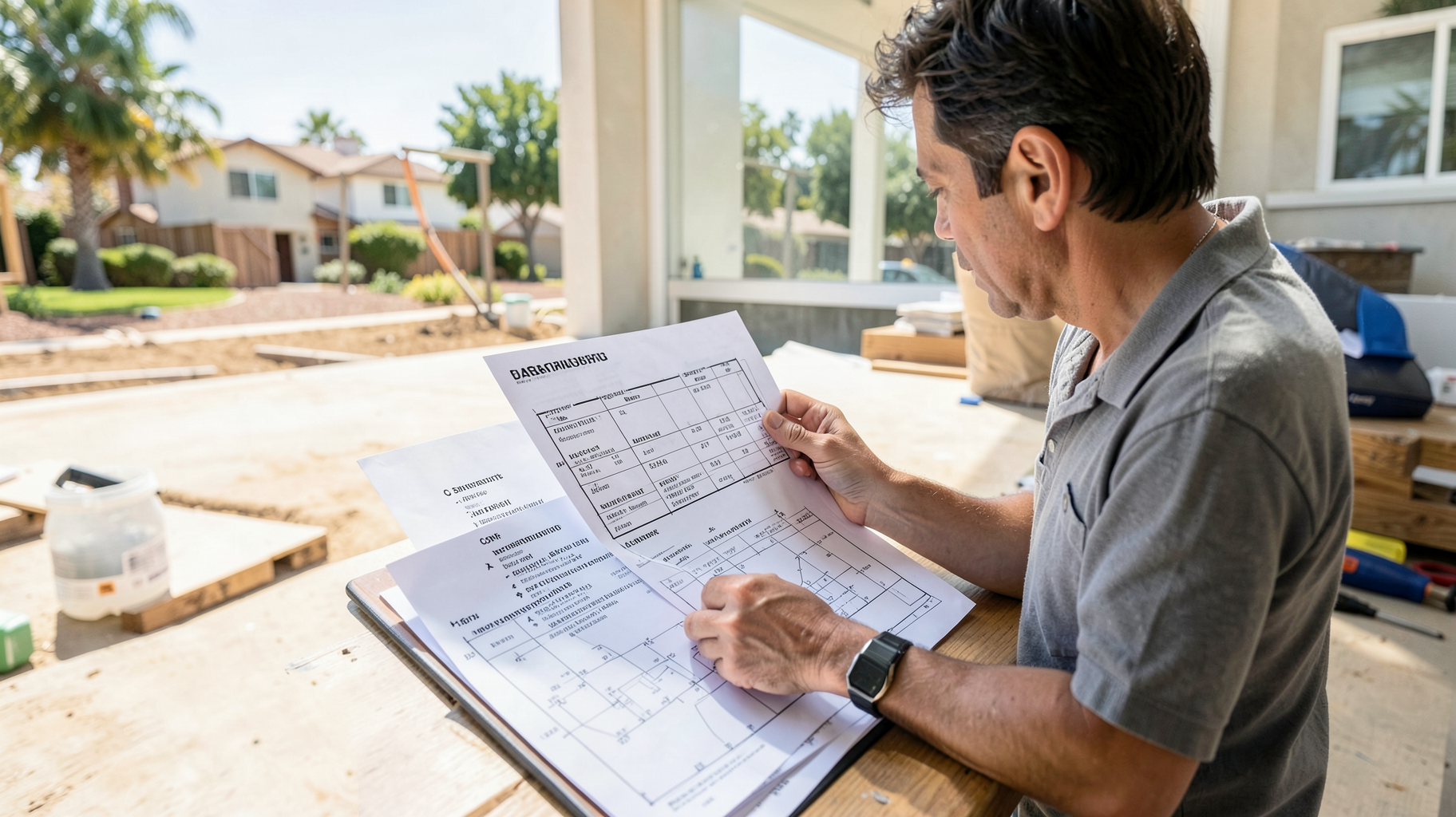
Request several itemized written proposals based on the same scope. Each proposal should make it possible to identify what is included, which materials or quantities are assumed, how allowances work, what the owner must provide, and which items are excluded. Permit-related work, design coordination, demolition, disposal, temporary protection, utility work, and final cleanup should be clarified when they apply.
An unusually low bid deserves clarification rather than automatic approval. Ask whether it omits work, uses different assumptions, relies on allowances, or excludes costs that another contractor included. A written explanation is more useful than a verbal assurance.
Check the Working Relationship Before You Sign
References can help you evaluate how a contractor works after the proposal is accepted. Ask recent clients whether the project finished near the agreed schedule, how changes and delays were handled, whether communication was consistent, and how unresolved concerns were addressed. Review portfolios and local directories as leads, but weigh specific, verifiable project feedback more heavily than a high-level rating.
Ask who will be your day-to-day contact, how often progress updates are provided, and who coordinates subcontractors. Clarify responsibility for site safety, material ordering, inspections, cleanup, and correcting defective or incomplete work. The contract should identify the scope, price structure, payment schedule, schedule expectations, change-order process, dispute-resolution approach, and warranty responsibilities in language you understand.
If your project is a residential remodel or new home, you can review the site's residential construction options. For commercial or other project types, use the service path that matches that work.
Frequently Asked Questions
How many contractor proposals should you compare?
Compare several proposals when practical, but consistency matters more than a specific number. Give each contractor the same project information and ask for itemized pricing so you can distinguish scope differences from actual price differences.
Should you choose the lowest bid?
Not automatically. First determine whether the bids include the same work, materials, assumptions, allowances, and responsibilities. A low bid that leaves out important scope may not represent the lowest eventual cost.
What should you ask about subcontractors?
Ask which trades will be subcontracted, who selects and supervises those firms, how scheduling is coordinated, and who remains responsible for quality and communication. The contractor should be able to explain the management structure without shifting responsibility to unnamed parties.
When should you ask about permits?
Requirements and the responsible permitting authority can differ between the City of San Diego, unincorporated San Diego County, and other cities or jurisdictions in the region. Identify the authority that applies to the property, then confirm in the written proposal who is responsible for permits and related costs. Permit responsibility, insurance requirements, bonds, and contract requirements can vary by project, jurisdiction, and contract terms; confirm permit details with the applicable authority and discuss insurance, bond, or contract questions with the contractor and a qualified professional when needed.
Make the Decision From Evidence, Not Pressure
The right contractor should be able to show a suitable project history, explain licensing and insurance documentation, provide a comparable written scope, and describe how the work will be managed. Once you have reviewed those points, choose the proposal whose risks and responsibilities are clearest—not simply the one with the most attractive headline price. Choose the path that matches your project type: review our residential construction services for residential work or our commercial building services for commercial work, then bring your written scope and questions to the conversation.
Leave a Reply